.svg)
.svg)
.svg)
What did we do with this information?

.svg)

This is a process called, "transcription." We tried using a zoom feature in order to turn this data into something more manageable and readable. There was a lot of problems with this approach as you see on the left hand side. Transcribing helped us pinpoint certain areas to focus on and made it read more like a script from a story.
Transcribe: put (thoughts, speech, or DATA) into written or printed form


We combined the themes of Positive Outlook, Discomfort, and Indifference of Surveillance into one theme.

This word cloud is a compilation of the student’s experience with surveillance into word cloud form, which makes certain words larger depending on how many times it is used. I created this in Python in order to translate the students' qualitative experience into something that we can recognize and point out and create themes from.

This Bar Graph represents a certain question in the AJL survey, "What is your comfort level with surveillance in your school?" African Americans are overrepresented in this graph but as we get more responses we would have a more balanced dataset.

This word cloud is a compilation of the student’s thoughts on the surveillance in their schools in word cloud form. This word cloud is particularly interesting because it highlights student’s feelings in hundreds of different interpretable ways.


The first chart we see represents the rate of how comfortable African/ black feel with surveillance

Now this chart represents the rate of how comfortable caucasian people feel with surveillance

Now this chart represents the rate of how comfortable Asian people feel with surveillance
We combined the themes of Positive Outlook, Discomfort, and Indifference of Surveillance into one theme.

- Findings on Awareness: The data revealed that African American students (73.8%) are significantly more aware of screen monitoring security measures like GoGuardian compared to Caucasian students (55.5%). This indicates a higher level of awareness among African American students about these security practices.
- Implications of Bias: The disparity in awareness suggests that schools with predominantly African American students may provide more in-depth explanations of security measures. This points to a potential bias in how security technology information is communicated in schools, highlighting a lack of knowledge in predominantly Caucasian schools.

Out of the three schools displayed on the table, BLA is the most detailed in responses. With only seven students represented, there is not enough data to make a conclusion on the relationship between racial makeup of schools and AI use. However, the fact that BLA is majority non-white points towards possible findings regarding research between AI implementation in schools and demographic information.

The information that this bar chart conveys is the student awareness of security cameras in public schools. For example, the majority of Students that are in Cambridge Public School, are not aware of security cameras, while Boston Public Students and Private students are aware or not. This bar chart is important to the theme because this chart is evidence that there is an imbalance of knowledge/awareness in security cameras in the Greater Boston schools.
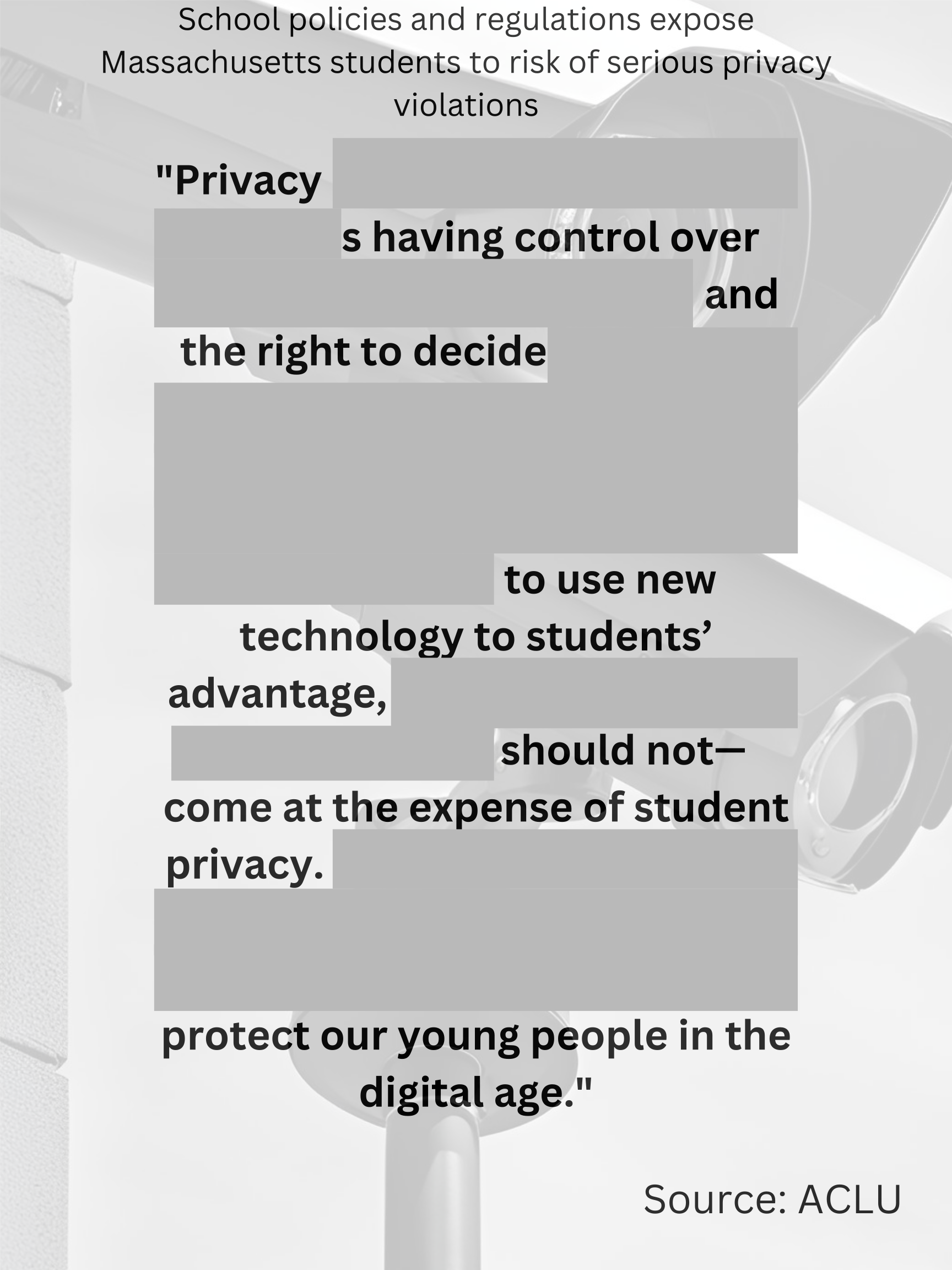
Created by collecting documents of different web, tech, and privacy policies and expressed in forms of art.
"form of found poetry wherein a poet takes an existing text and erases, blacks out, or otherwise obscures a large portion of the text, creating a wholly new work from what remains."
(The American Writers Museum)
.png)
.png)
.png)